Why Smart Money Is Taking Poland Seriously in 2026
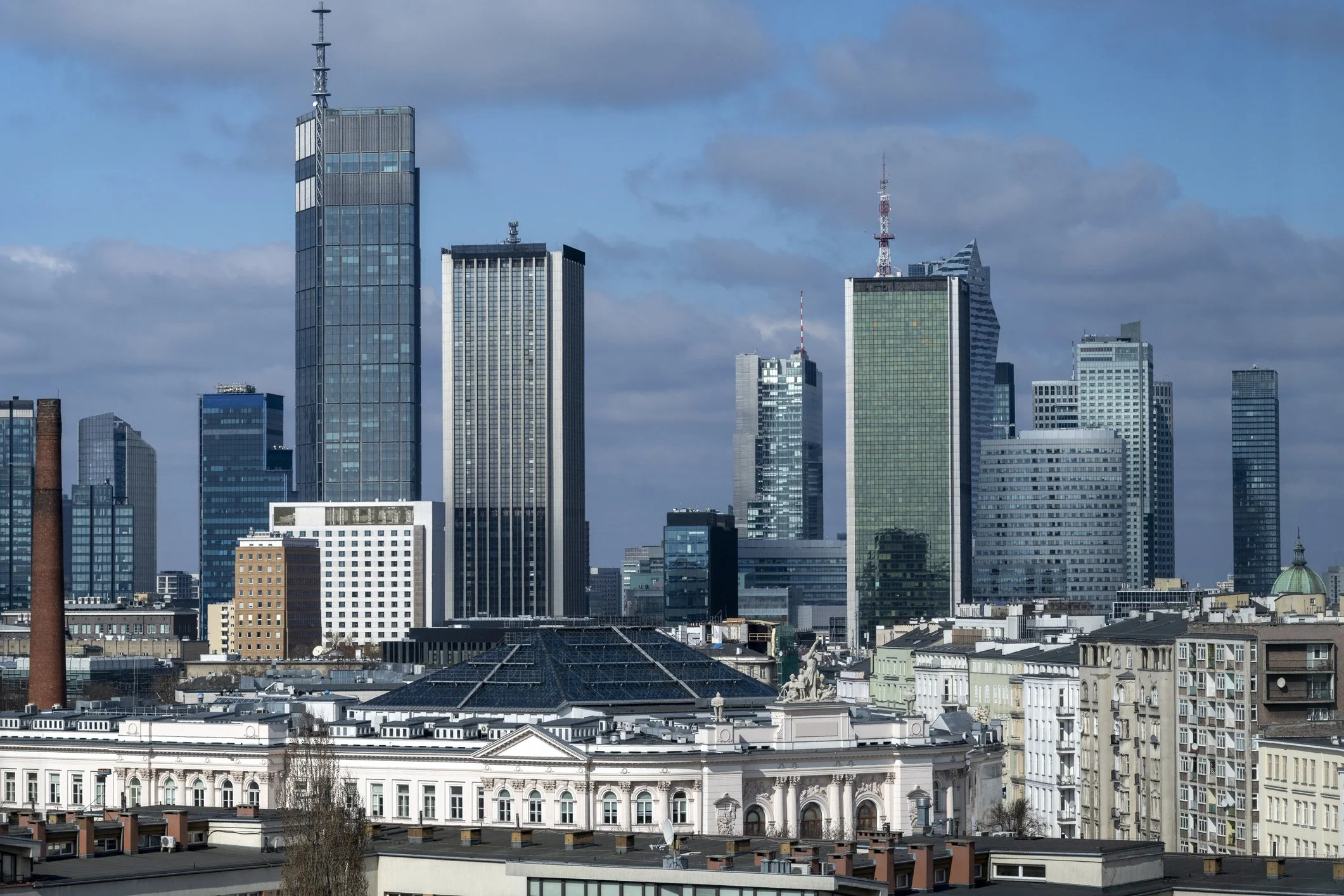
Photo: Dreamstime.com
In 2017, working on instinct rather than evidence, I made a private bet that Poland was a dark horse the rest of the world had underestimated, and that its moment was close.
In 2026 that moment has plainly arrived, and the case for investing in Poland no longer rests on a feeling.
The honest answer to whether foreign businesses should take this market seriously is yes, and more seriously than any other country in Central and Eastern Europe.
What has changed is not only the scale of the opportunity but the reason for it: the Poland that newcomers arrived in a decade ago competed on price, while the Poland that has taken shape in Warsaw and across the country competes on something sturdier. It also comes with two structural catches that no promotional brochure will mention.
The number that ended the argument
For years, presenting Poland to foreign boards meant managing perceptions. The figures now do the persuading.
The International Monetary Fund records Polish output just above 1.03 trillion dollars in 2025, the first time the economy crossed the trillion mark, on growth of 3.6 percent, the fourth-fastest in the European Union and well above the bloc's average of around 1.3 percent.
The European Commission projects roughly 3.5 percent again for 2026, and the EBRD a slightly stronger 3.7 percent.
Output in the final quarter of 2025 accelerated to 4 percent year on year, confirming Poland as the fastest-growing large economy in the Union. Set against a near-stagnant Western Europe, that differential compounds, and it is the single most important number for anyone weighing entry.
The picture is not flawless, and an adviser who pretends otherwise should not be trusted.
Poland remains a guest at this December's G20 summit in Miami rather than a full member, even as it lobbies for permanent admission, and on income per head it still sits around 47th in the world, behind the Czech Republic and some Baltic states.
The expansion leans heavily on European Union recovery funds, worth close to 3 percent of GDP in 2026, and the budget deficit has been running near 6.5 percent.
The sensible reading is to discount the "next Germany" headline and buy the trajectory instead: the steepest sustained climb in the region, with a fiscal correction to be priced in once the EU money tapers.
Where the cranes point now
The cranes were the first persuasive sign.
In 2017 the construction sites across the capital read as the unmistakable signature of a growing economy, an impression reinforced by an old Chinese proverb, if you want to get rich, build roads first. The cranes remain, but the structures beneath them have changed.
The most active sector over the past year has been green and renewable energy: manufacturing of lithium-ion EV batteries, trading of solar modules, inverters, storage systems. The EBRD identifies the energy transition, together with digitalization, as a principal driver of Poland's investment rebound. The clearest emblem is offshore. Baltic Power, a joint venture between ORLEN and Canada's Northland Power, will bring Poland's first offshore wind farm online in the second half of 2026, with 76 turbines and roughly 1.14 gigawatts of capacity, enough to meet around 3 percent of national electricity demand. Further farms from PGE, Ørsted and Equinor are already under construction, and some turbine components are being manufactured locally, at a new Vestas plant in Szczecin.
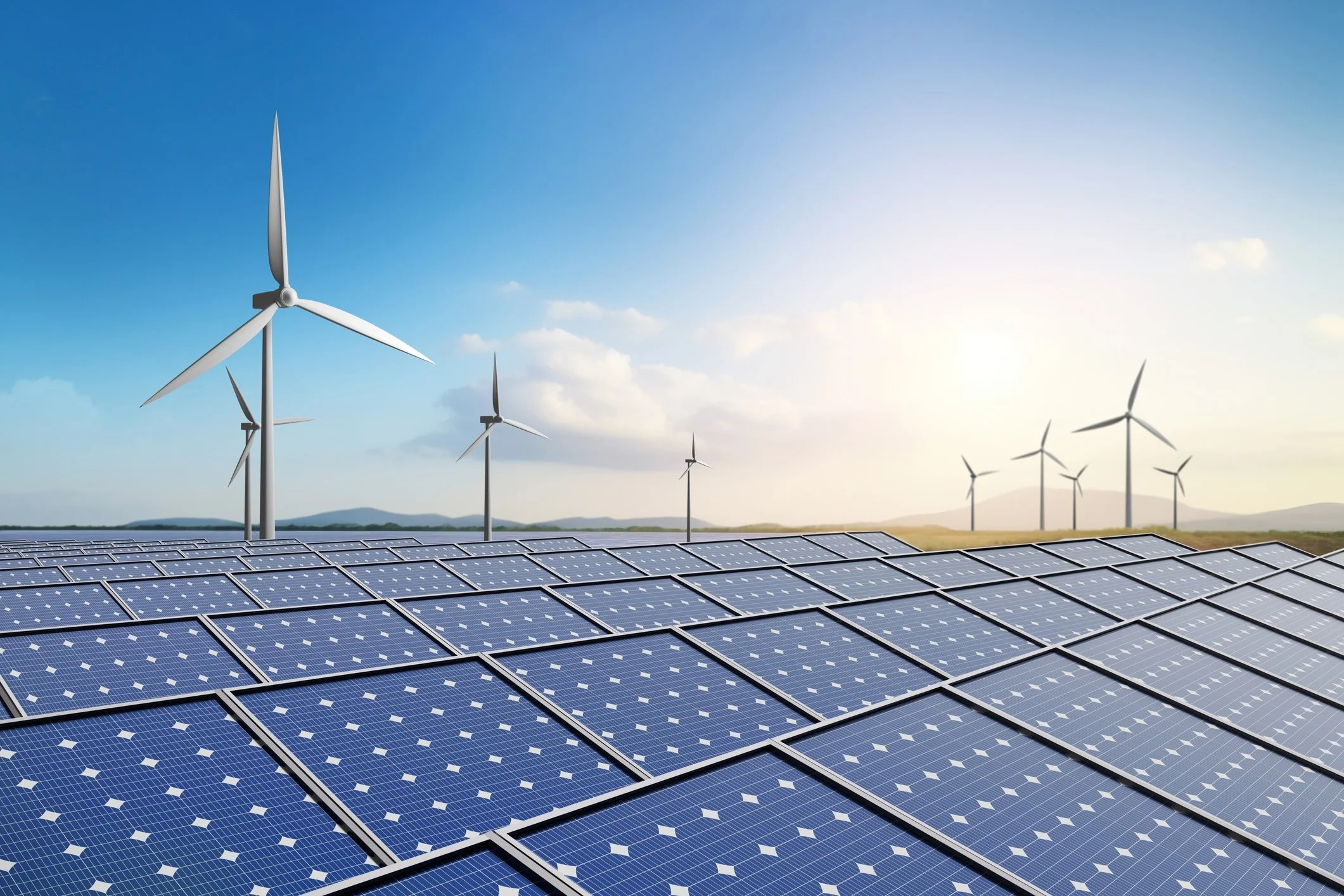
Photo: Dreamstime.com.
The louder story is digital, and it maps precisely onto the talent argument. Poland's data centre market, worth about 1.2 billion dollars in 2024, is forecast to reach some 2.8 billion by 2030; Microsoft, which opened its first regional cloud near Warsaw in 2023, has committed a further 700 million dollars to expand Polish AI and cloud capacity this summer. Google has operated here for two decades, runs an engineering hub of roughly 2,000 people, and has pledged to train a million Poles in artificial intelligence. The Financial Times ranked Warsaw third among its European cities of the future for 2025, behind only London and Dublin. None of this is driven by low wages. The magnet is a pool of more than 400,000 IT specialists and the predictability hyperscalers require. One caveat deserves emphasis for any power-hungry project: the binding constraint is no longer talent or cost but the electricity grid, and Warsaw's is already tight. Securing a grid connection should precede every other commitment.
The quiet engine of business services
Beneath the headline investments sits a less glamorous but more dependable layer. Poland hosts more than 1,800 shared-service and business-process centres employing over 430,000 people, one of the largest such concentrations in Europe. These operations, running finance, IT, human resources and analytics for global corporations, rarely make news, yet they are precisely the diffuse, talent-led capital that compounds quietly and proves difficult to dislodge once embedded. For a foreign company testing the market, a services centre is often the lowest-risk first step: modest capital exposure, immediate access to skilled graduates, and a foothold from which heavier commitments can follow once the operating reality is understood rather than assumed.
The incentive architecture newcomers rarely map in advance
Foreign founders frequently arrive without a clear view of Poland's tax toolkit, and the omission is costly, because the instruments are unusually generous.
The Polish Investment Zone, which replaced the old special economic zones in 2018, offers a corporate income tax exemption on income from a new investment for up to 15 years, available across the entire country rather than in designated enclaves, with the exempt amount calculated as a regionally varying share, commonly 10 to 50 percent for large enterprises and more for smaller ones, of qualifying costs.
The Estonian-style CIT, introduced in 2021, defers corporate tax entirely until profits are distributed, allowing a company to reinvest its full earnings and lowering the effective rate substantially for businesses that retain capital.
Research and development relief permits the deduction of up to 200 percent of qualifying R&D costs, and the definition is broader than many assume, reaching process improvements and software development rather than only laboratory science.
Income from qualifying intellectual property can be taxed at 5 percent under the IP Box regime, which may be combined with R&D relief, while a separate robotization allowance and a holding-company regime offer further shelter.
Several of these are mutually exclusive, so the value lies in choosing the right combination before incorporation, not after.
A DEFENSE boom that is also an industrial one
Poland's response to the war on its doorstep carries an industrial side-effect worth noting. The 2026 budget raises defence spending to 4.8 percent of GDP, around 200 billion złoty, the highest share in NATO and ahead even of the United States. The outlay is increasingly tied to domestic production: Poland now accounts for a large share of South Korea's arms exports, with K2 tanks and howitzers being assembled on Polish soil, and has secured tens of billions of euros in EU defence loans under the SAFE programme. For investors in manufacturing, logistics, components and dual-use technology, the defense build-out has become one of the more reliable demand signals in the economy.
Why price is no longer the pitch
One episode belongs in every investment memo about Poland. In 2023, Intel announced a 4.6 billion dollar semiconductor plant near Wrocław, celebrated as the largest greenfield investment in Polish history and a source of 2,000 jobs. In July 2025 the project was cancelled outright, forfeiting roughly 1.9 billion dollars of EU-approved state aid and leaving 400 hectares of prepared land empty. Poland was not at fault. Intel was restructuring around its own losses and the market's pivot from CPUs toward AI chips. The lesson is not that the country is risky but that subsidised trophy megaprojects track the investor's balance sheet rather than the host's fundamentals. The capital that actually compounds in Poland is the diffuse, talent-led variety, the cloud regions and service centers and mid-cap manufacturers, not the single headline that can disappear in one earnings call.
Build your first team around Polish talent
Poland has digitized its business administration with real ambition, and the results show. Company formation runs through the S24 portal, correspondence with the tax office is electronic, and the mandatory e-delivery system, e-Doręczenia, became obligatory for registered companies on 1 April 2025. A company can be incorporated in a matter of days.
Bringing in a specialist from abroad takes longer. Work permits in Warsaw currently run to around six months, and temporary residence decisions can take close to a year. This reflects a deliberate and understandable choice rather than any shortcoming. A new law on employing foreigners, effective from 1 June 2025, replaced legislation more than two decades old, moved the whole process online, and gave local authorities the ability to prioritize Polish nationals for certain roles, as part of a considered migration strategy running to 2030 that also fast-tracks applications in strategic sectors. A country that has built one of Europe's deepest and best-educated talent pools is, reasonably enough, choosing to draw on it first.
For an incoming investor the implication is straightforward and, in truth, advantageous: build the first team around Polish talent. It is abundant, highly skilled, and the quickest path to operating, and it aligns a new venture with the country's own priorities from the very beginning. Reserve the longer foreign-hire timelines for the specialist roles that genuinely require them, and plan for those early.
Where timing and local counsel matter most
Poland's regulatory landscape rewards investors who follow it closely, and the clearest current example sits in the financial sector. The European Union's MiCA framework asks each member state to designate an authority to license crypto-asset service providers. Poland is still completing that step: the implementing legislation has been returned for further work twice, in December 2025 and February 2026, amid a genuine debate about how to protect smaller operators and consumers without placing excessive burdens on a young industry. Until the law is finalized, the financial regulator is not yet issuing the new licenses, and the roughly 1,300 crypto firms already registered in Poland continue to operate under transitional rules through 1 July 2026, while providers licensed elsewhere in the Union may serve Polish clients by passporting.
This is less a criticism than a practical reminder. Poland is modernizing quickly across most of its administration, and individual frameworks naturally advance at different speeds as lawmakers work to get the detail right. The lesson is a universal one: in any jurisdiction, the regulatory calendar deserves as much attention as the financial model, and the surest way to navigate a framework still taking shape is to work with advisers who follow it week by week. Read carefully, a transition like this is as much an opening as an obstacle, and it rewards those who position themselves early.
The dinner-table answer
So, across a dinner table, should a foreign business look at Poland seriously?
Yes, and the numbers now say so as plainly as instinct once did.
The discipline lies in buying the right Poland: the trajectory rather than the trophy, the talent rather than the discount, the incentive structure mapped before incorporation rather than after, and a local team in place from the first day.
Approach it with care and good local counsel, and the opportunity is among the most compelling in Europe.
Poland rewards those who take the time to understand how it works, which is reason enough to arrive with someone who already does.
This article reflects the market, legal, and regulatory position in Poland as of June 2026 and is intended for general information only; it does not constitute legal, tax, or investment advice. Conditions in Poland are evolving quickly, and figures, regulations, and processing times can change. We recommend seeking professional advice tailored to your specific circumstances before making market-entry or investment decisions. If any part of this article raises questions specific to your situation, we are happy to talk it through.

About the Author
Terra Xu is Head of Structuring and Solutions at Oruga Group, a Warsaw-based corporate law and investment advisory firm. She advises international businesses on Polish corporate law, regulatory compliance, and cross-border market entry.